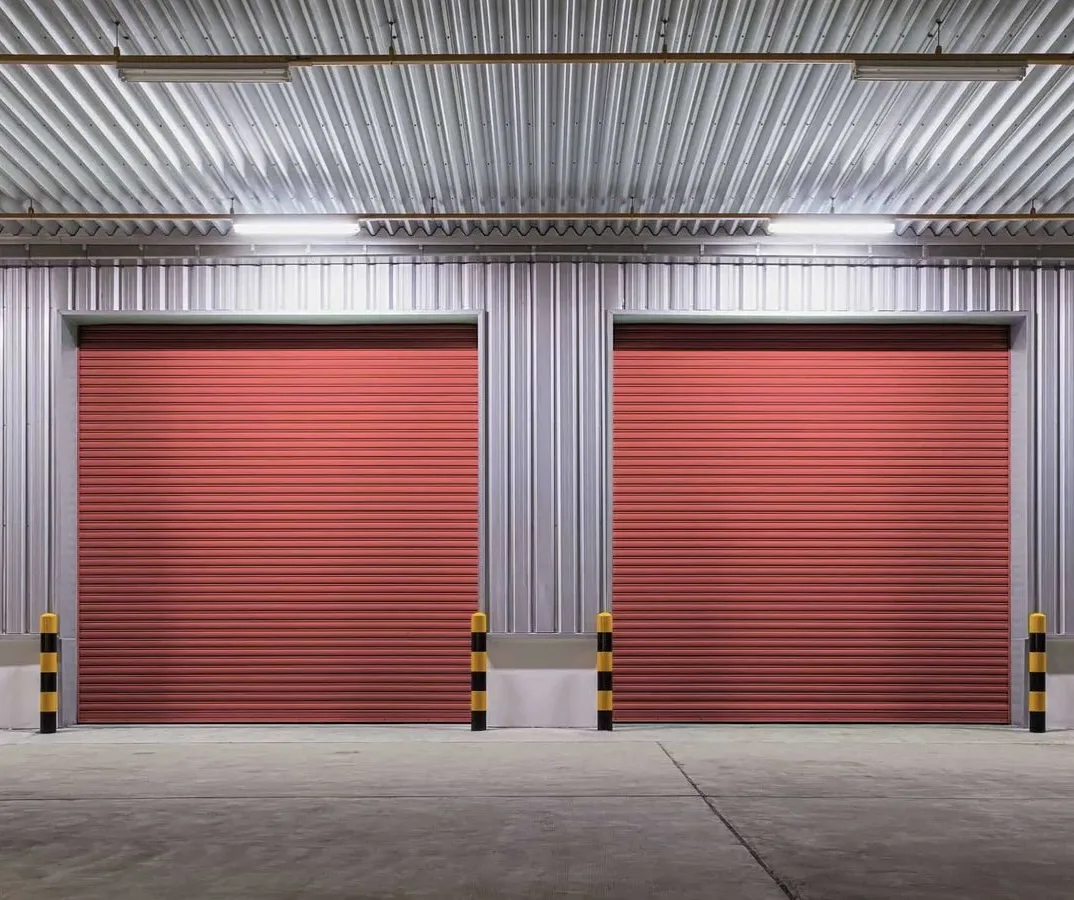
When you specify a security shutter, the headline numbers — width, height, motor — get most of the attention. But the single decision that determines how the shutter performs a decade from now is the base material. It is also the easiest one to get wrong.
Aluminum is light and inexpensive to form, which is exactly why it dominates the budget end of the market. The trade-off shows up under pressure, impact, and the relentless heat-and-humidity cycle of the region.
Where aluminum gives way
Lighter slats bend and lose their shape under repeated loading. In coastal and humid environments, corrosion creeps in at the joints first, then spreads. The result is a door that still opens — but no longer seals, runs quietly, or looks the part.
Hot-dip galvanized steel takes the opposite approach. The 120 zinc layer forms a sacrificial barrier that protects the steel beneath, and the structural strength means the slat holds its geometry through years of daily cycling.
The bottom line
Galvanized steel costs a little more upfront and pays it back in service life, security, and a finish that still reads premium years later. For projects that need to perform — not just pass inspection — it is the material that defines the result.